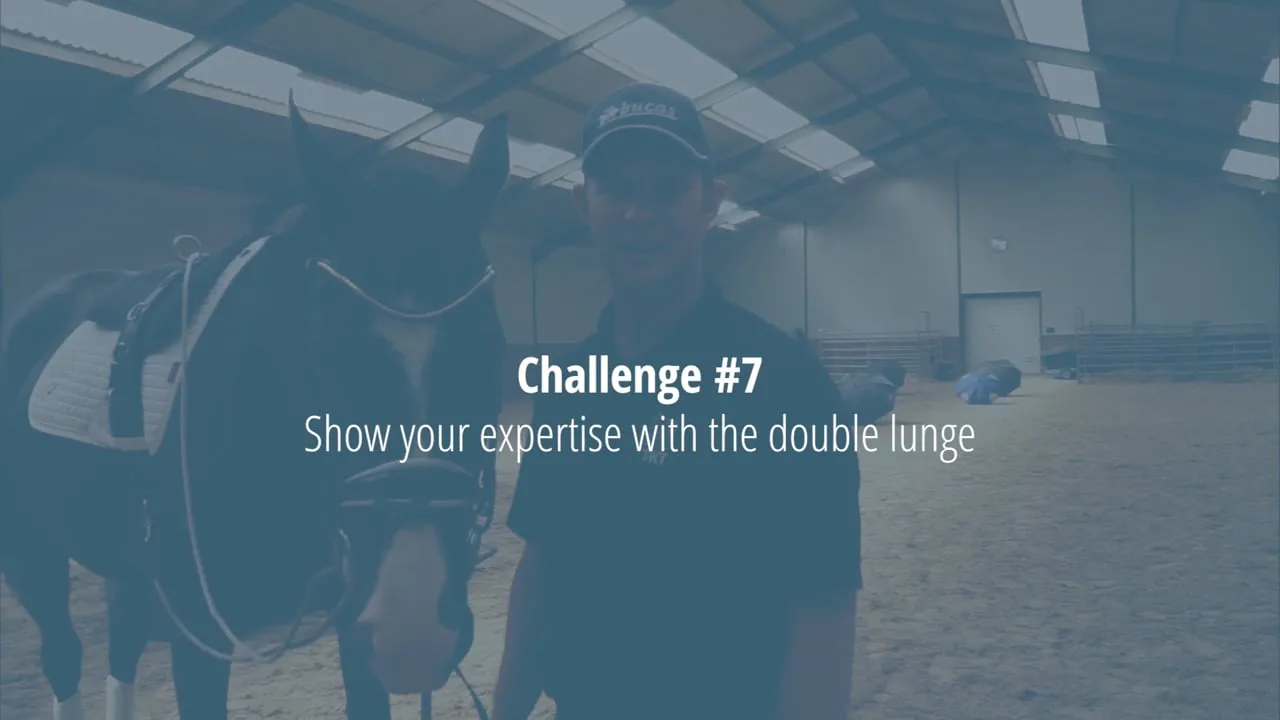
On a single lunge line you can see it happen. Something moves at the edge of the arena, his balance tips onto the forehand, his head comes up, and the circle turns into a tug of war. Sending him forward past it does not change anything, because the tension was never about the object. It is sitting in his body, and on one line you have no way to help him do something with it.
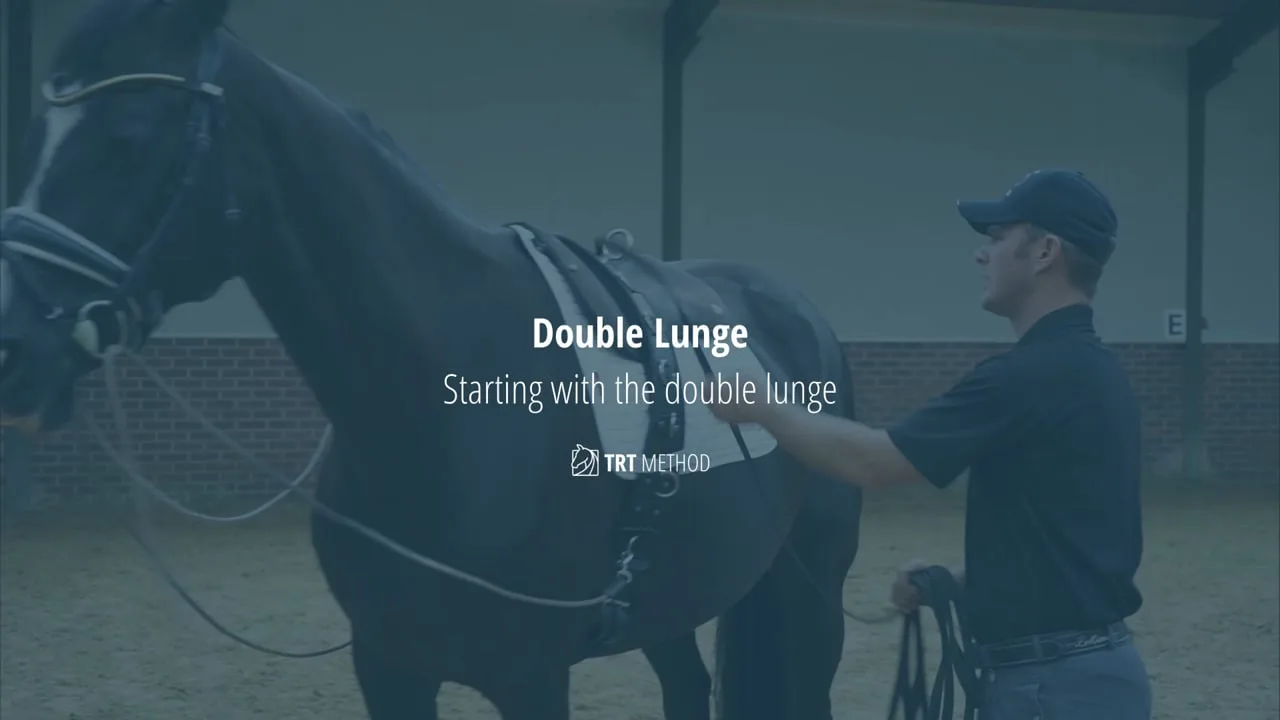
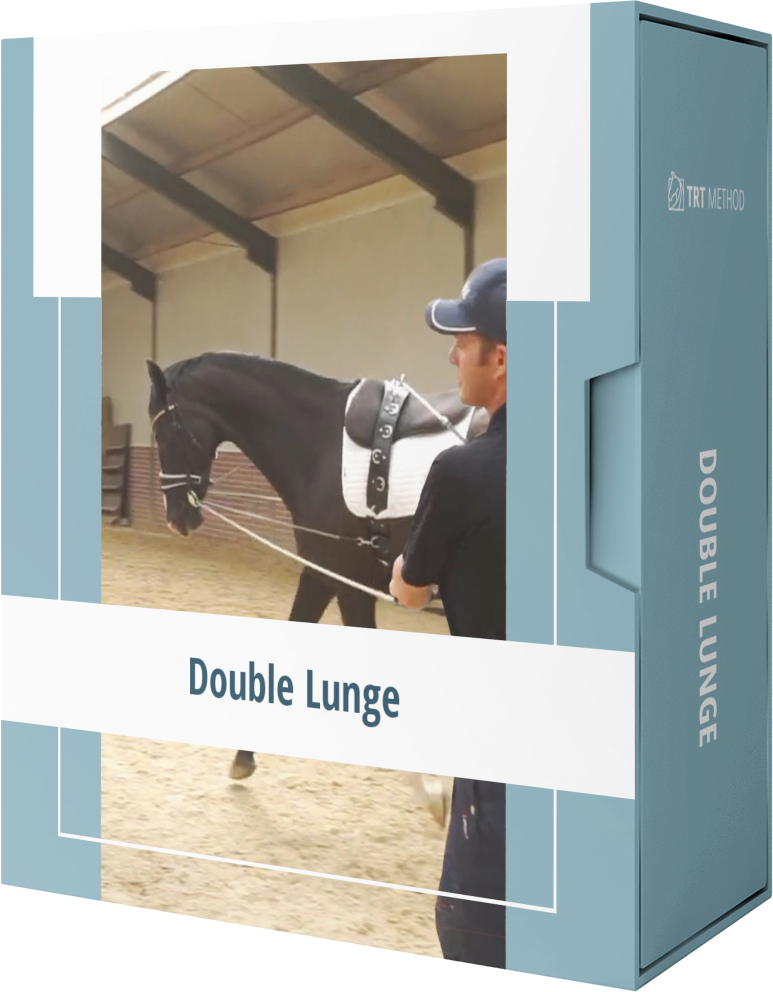
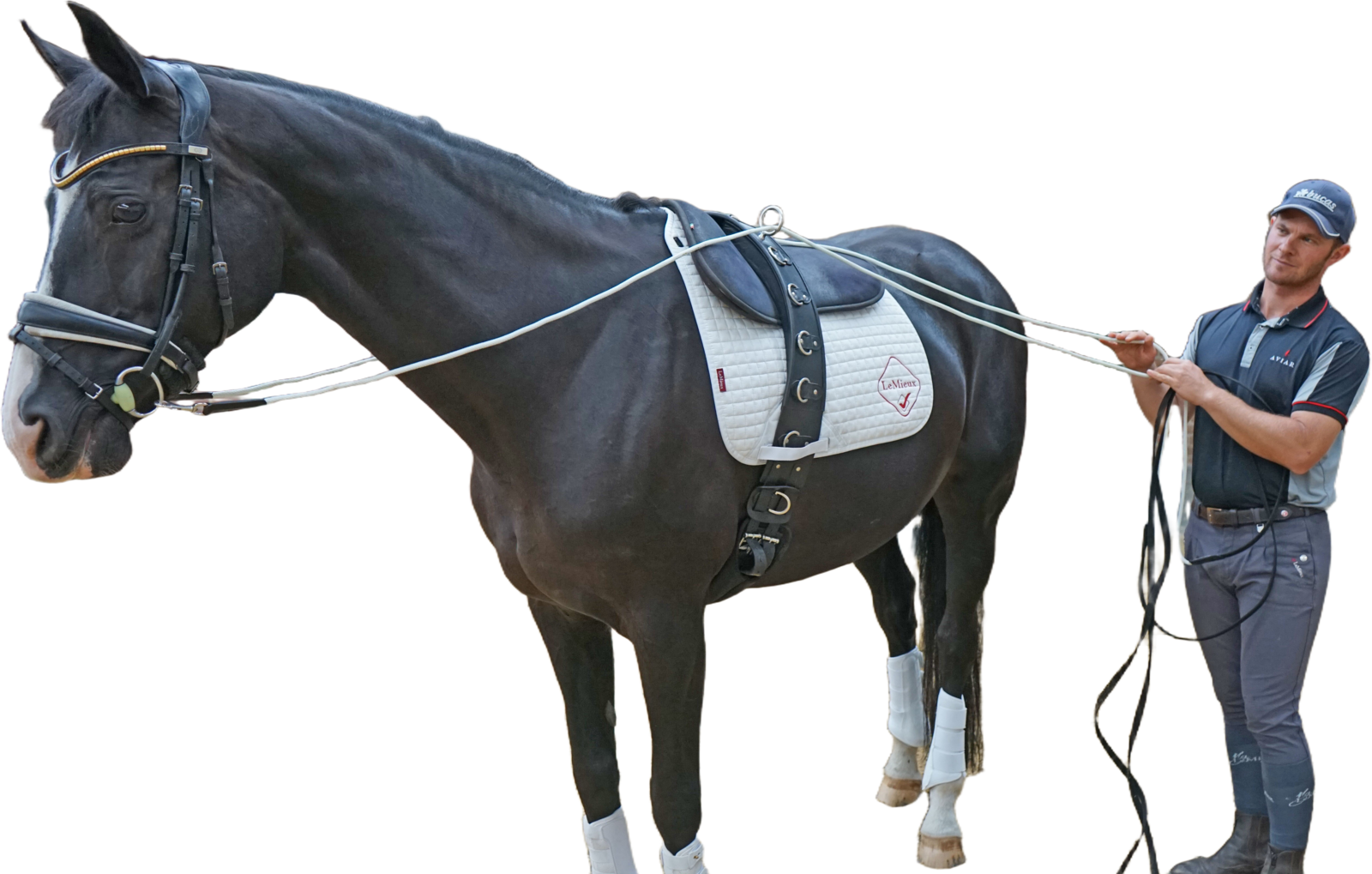
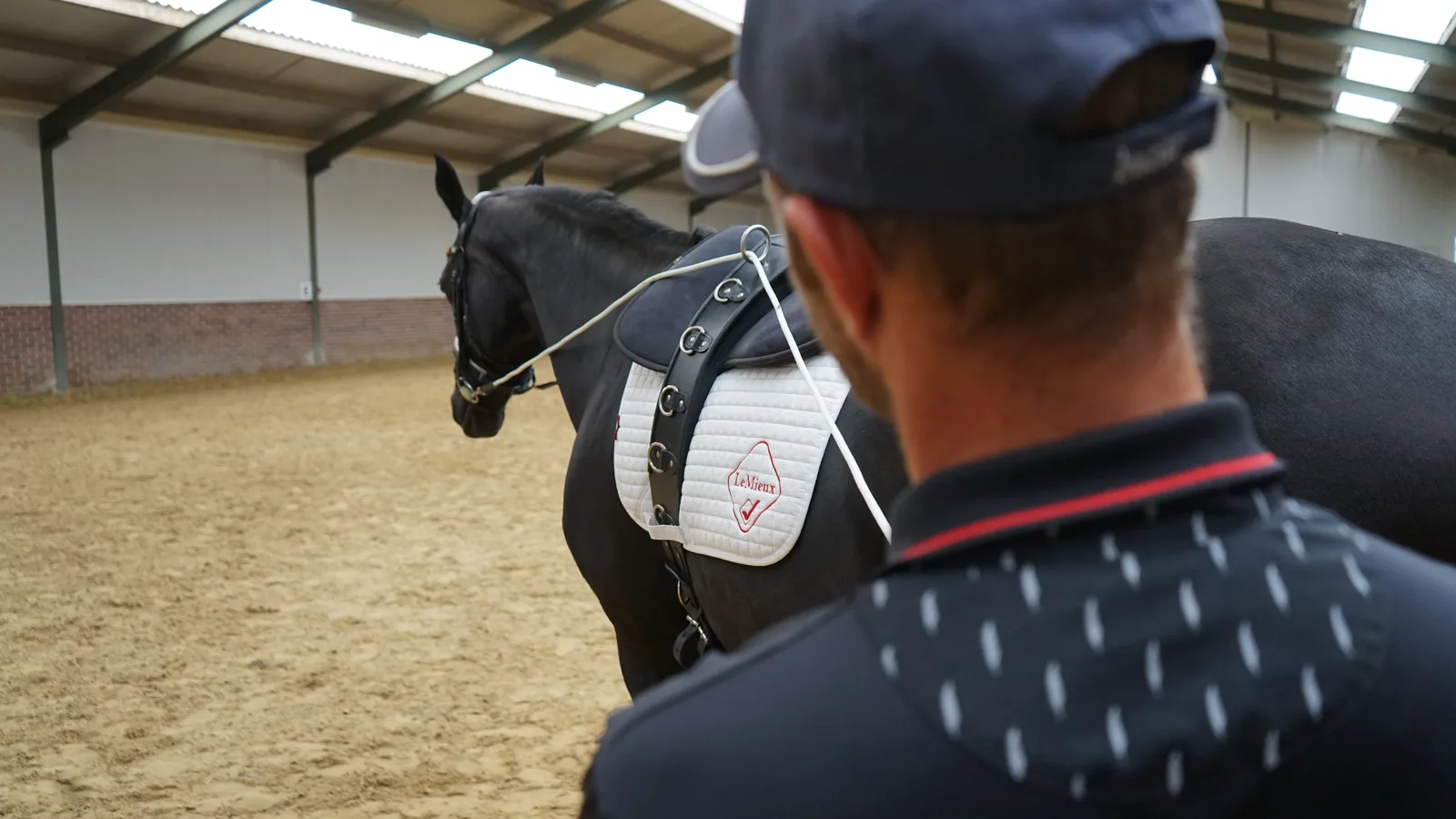
The double lunge gives you what the single line cannot: a connection to both sides of his body and to his hindquarters. Instead of chasing relaxation by tiring him out, you give him a posture in which he can find it himself, and you build it step by step, through transitions, changes of direction and the exact situations that used to undo him. He learns it without a rider on his back, which is why it holds up so well once you are.

 Part 01