Brand New Course!
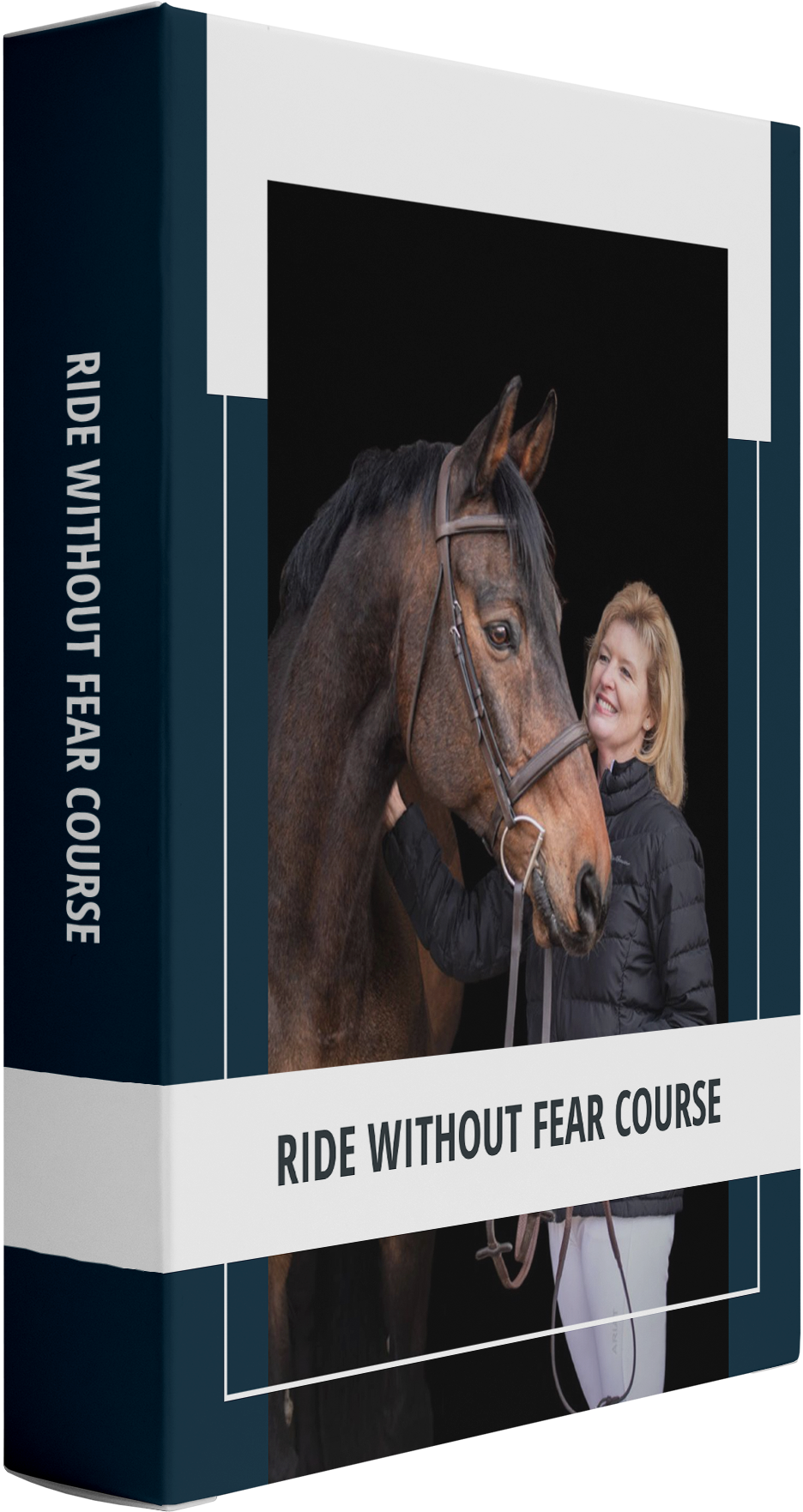
Ride Without Fear Course
Overcome fear and rebuild your confidence in the saddle, at your own pace. Real nervous-system tools, taught by licensed clinical therapist and rider Kristi Seymour.
30-Day Money Back Guarantee
Your fear is not weakness.
It's biology.
Maybe a fall changed everything. Maybe it crept in slowly after a spook, a near miss, or a horse you stopped trusting.
The mind says you want to ride. The body locks up the second you put your foot in the stirrup.
That is not a character flaw. It is your nervous system doing exactly what it was built to do, and it can be retrained.
Over-activation
Rushing thoughts, shallow breathing, tight grip, over-cueing. Your sympathetic system is firing and every shift in your horse becomes a warning sign. You are riding from a body braced for impact.
Freeze and shutdown
You go quiet. Hips lock, hands lose feel, the plan disappears. It looks like calm from the outside, but inside the system has pulled the emergency brake and confidence collapses with it.
Co-regulation disruption
Horses read nervous systems before they read aids. When yours is dysregulated, theirs follows. The harder you try to push through, the more the partnership unravels under you.
A closer look at freeze
What freeze actually looks like.
Freeze is the response most riders miss in themselves. It feels like calm, but the body is locked. Learn to recognise it on the ground and in the saddle, and you stop misreading your own nervous system.
In your body
Physiological signs of freeze
- Sudden muscle immobility or collapse, legs lock, body stiffens.
- Holding breath or very shallow breathing.
- Heart rate drop after the initial spike (bradycardia).
- Tunnel vision or narrowed field of awareness.
- Detached sensation or numbness, "I wasn't even there."
- Delayed reaction to danger or to trainer cues.
- Loss of voice, unable to ask for help.
- Shaking or trembling afterwards as residual energy discharges.
In your riding
How it shows up in the saddle
- Going blank during a lesson or class, "I just froze."
- Sitting rigid in the saddle after a spook or buck.
- Inability to dismount or move when danger appears.
- Emotional shutdown when talking about the fall.
On recovery
Completing the cycle.
Recovery isn't about overriding the freeze. It is about completing the cycle the nervous system started, letting the body discharge the energy it never got to spend.
The patterns
Six patterns that quietly
keep fear in place.
Fear rarely announces itself. More often it shows up as a habit you could justify. Read each pattern below and notice any that have shown up in your last few months of riding. Don't judge them. They were protective once. They are simply no longer serving you.
"I'll just do groundwork until I feel ready." Months or years pass.
Constantly checking tack, controlling every stride, removing spontaneity.
"It's fine, it happens to everyone." Said with a tight jaw.
Numbness or stiffness mistaken for discipline.
"I froze because I'm weak." Internalising the event as a failure.
Forcing back to riding too soon to prove strength, reinforcing anxiety.
"The body protected you when it had no other option. Once you can name the pattern, you can stop being run by it."
The Philosophy
The goal is not
the absence of fear. It is learning to regulate it.
Spot it early
Catch dysregulation before performance collapses.
Tools in the saddle
Breath, grounding, and cue words you use mid-ride.
Recover after
Reset your system after spooks, falls, and hard days.
Co-regulate
Rebuild trust with your horse as your partner.
What you get access to
The 8-Module Curriculum
A clear, trauma-informed path from understanding fear physiology, to regulating in real time, to riding with sustainable confidence.
1. Fear Is Biology, Not Weakness
Normalize what is happening in your body and immediately reduce shame. Learn the science of the rider's nervous system in plain language so you can stop fighting yourself.
- Fight, flight, freeze in the saddle
- Fear vs real danger
- Grounding and pre-ride centering
2. What Fear Looks Like in the Saddle
Spot nervous-system dysregulation in yourself and your horse before performance breaks down. Catch the early signs you have been missing.
- Mapping your escalation pattern
- Reading your horse's stress signals
- One-stride focus and visual orientation
3. Trauma, Falls, and the Rider Nervous System
Why fear can stay long after the body has healed. Work with fear memory, trigger stacking, and the nervous-system patterns that follow a fall.
- Recognising trauma responses
- Bilateral stimulation and orienting
- Building a personal fear ladder
4. Forced Bravery vs Regulated Riding
Move past the just get back on culture. Build confidence through paced, regulated exposure that respects your nervous-system threshold.
- Permission to stop and reset
- Tracking your window of tolerance
- Pacing instead of pushing through
5. Real-Time Regulation & Recovery Tools
A complete toolkit for before, during, and after the ride. Practical tools you can actually use mid-stride when activation spikes.
- Pre-ride centering and breath pacing
- Cue words and heel grounding mid-ride
- Decompression and bilateral resets after
6. Rebuilding Confidence Through Regulated Exposure
Confidence is rewired through successful, regulated repetition. Build a structured comeback plan that compounds week by week.
- Graded exposure and fear ladders
- Tracking glimmers and small wins
- Returning to jumping, shows, or trails
7. Identity, Shame, and Performance Pressure
Untangle fear from shame, perfectionism, and the pressure to perform. Work that protects your nervous system from the inside out.
- Narrative reframing and self-compassion
- Separating identity from performance
- Recovering after rough rounds and rough days
8. Trust, Co-Regulation, and Sustainable Performance
Rebuild trust with your horse as co-regulator, not trigger. Lock in resilience, faster recovery, and long-term emotional flexibility.
- Co-regulation breathing and synchronisation
- Mounted grounding through movement
- Long-term resilience mapping
A trainable skill
Regulation is not a personality trait. It is something you can learn.
Step by step, ride by ride. Build the nervous-system tools that keep you steady in the saddle, even on the days fear shows up first.
Lifetime access. Go at your own pace.
Your Instructor
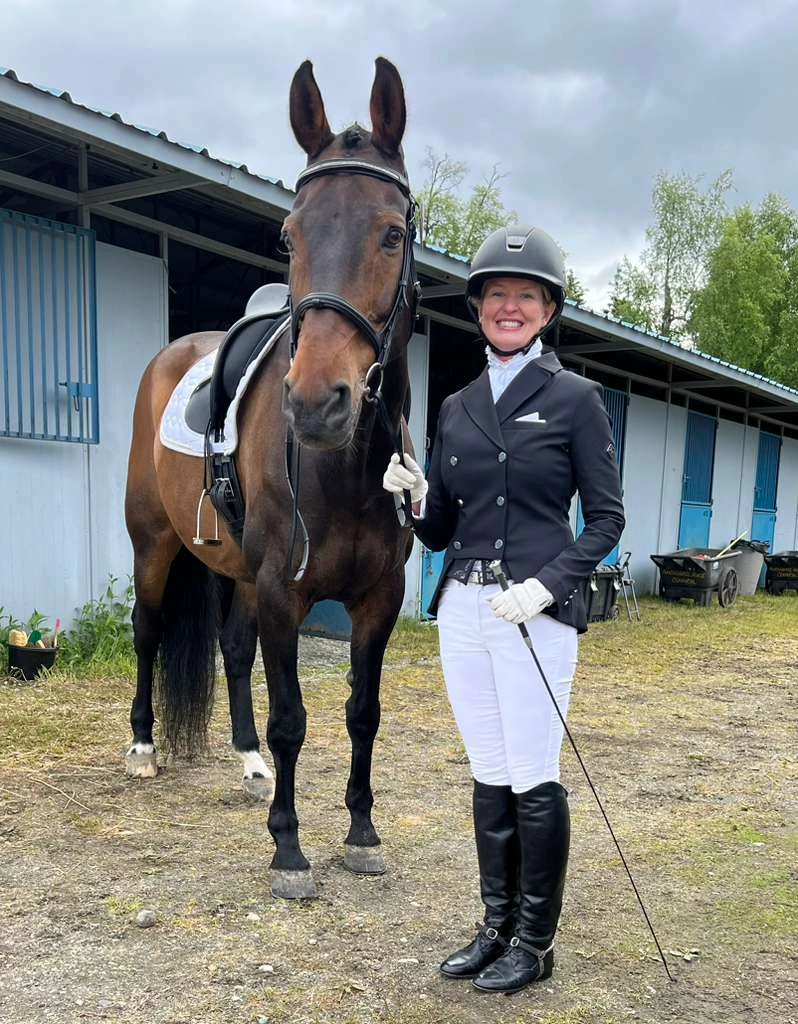
Kristi Seymour
Licensed clinical therapist, sports performance coach, and lifelong equestrian.
Kristi has worked as a licensed clinical therapist for over 20 years and brings five decades in the saddle to her teaching. She has competed in show jumping up to 1.45m and holds her Bronze Medal in Dressage.
Her work sits where clinical psychology, nervous-system science, and horsemanship meet. She is trained in EMDR, Somatic Experiencing, polyvagal-informed practice, and sports performance psychology, and she uses these tools to help riders rebuild confidence after fear, falls, and burnout.
- 20+ years as a licensed clinical therapist
- 50+ years riding, show jumping to 1.45m
- USDF Bronze Medal in Dressage
- EMDR and Somatic Experiencing trained
- Polyvagal-informed performance coach
- Thousands of nervous and returning riders coached
Who This Is For
This is for you if...
You are coming back after a fall and your body locks up before your brain even decides to be scared.
You force yourself through the nerves, push past them, and pay for it for days afterwards.
You freeze in corners, before fences, or the moment your horse shifts under you.
You used to compete or hack out freely and you cannot find your way back to that rider.
You feel calm on the ground and a different person the moment you sit in the saddle.
Your horse has started mirroring your tension and the partnership feels off.
You are a trainer or coach who wants tools to support nervous and returning riders.
You are tired of being told to just relax and want real tools you can use in real time.
118,927
Active Members
89+
Countries
Lifetime
Access to Course
Live
Q&A Sessions with Kristi
Online video course
Get back in the saddle calm, confident, and in control
8 modules. Lifetime access. Watch on any device.
8-Module Curriculum
TRT Ride Without Fear Course
Fear Is Biology
Fear in the Saddle
Trauma and Falls
Regulated Riding
Real-Time Tools
Regulated Exposure
Identity and Shame
Co-Regulation
Get Instant Access
Get instant access to the full course today.
TRT Ride Without Fear Course
The new course with Kristi Seymour.
- Full TRT Ride Without Fear Course (8 Modules)
- Kristi's complete real-time regulation framework
- Performance Breakdown States: spot, intervene, recover
- Before, during, and after ride regulation tools
- Trauma-informed return-to-riding and post-fall protocols
- Graded exposure plans and fear-ladder templates
- Lifetime access to all course materials
- Access to the global TRT Community (118,000+ members)
- Live Q&A sessions with Kristi
or pay in 2 installments of €104
Pay in 2 x €104Approx. $215 USD · £169 GBP · A$328 AUD · C$295 CAD
Instant access to the full course.