9 steps to starting your young horse
Starting your young horse under saddle begins long before you put your foot in the stirrup. It starts with helping your horse understand his body, the environment and the questions you will later ask as a rider.
In this video series, Tristan Tucker introduces nine steps that connect the first groundwork exercises with preparing to get in the saddle. Each step builds on what your horse already understands, rather than introducing everything at once.
These nine videos give you a first look at the approach behind the Starting Young Horse Course. They cover only a small part of the full programme. Want to learn more? Explore the Starting Young Horse Course.
This overview is not a complete standalone training programme.
1.Build understanding through groundwork
Groundwork is where your horse begins to understand coordinated movement, balance and direction. Tristan looks at how the front and hind legs connect, rather than sending the horse around to tire him out.
These familiar questions form a foundation for what will later be asked from the saddle. The focus is on understanding his body, not adding speed before that connection is there.
What to noticeLook for the connection between the horse’s front and hind legs. The focus is on coordinated movement, not speed or tiring the horse out.
2.Prepare for the environment with the tools
The tools introduce elements your horse will meet in his environment: movement, touch, sound and approach. This preparation is about helping him understand what to do with his body when something unfamiliar happens.
Standing quietly beside an object is not the whole aim. Tristan connects these experiences to a familiar groundwork response, paying attention to how the tool approaches and how it is taken away.
What to noticeWatch how Tristan introduces and removes the tool. The direction and energy of the object matter, including when the horse begins to relax.
3.Introduce the meaning of girth pressure
Before the saddle, Tristan uses rope preparation to introduce the feeling of pressure around the belly. The question is not only whether the horse accepts that feeling, but how he responds to it in his body.
That understanding is explored in movement as well as standing. The preparation connects the new pressure to a response the horse already recognises.
What to noticeStanding still is only part of the picture. Tristan also wants to know how the horse organises his body when he feels the pressure and starts to move.
4.Introduce the saddle pad and saddle
The saddle pad and saddle continue the preparation with the tools. The horse has already encountered movement, touch, sound and approach; the equipment is introduced within that familiar conversation.
Tristan keeps his body language consistent and returns to known groundwork when more preparation is needed. The saddle is another stage of the process, rather than a separate event the horse must simply tolerate.
What to noticeThe handler’s body language stays consistent. The saddle is introduced as a continuation of the preparation, rather than a completely different event.
5.Help your horse take his first steps with the saddle
With the saddle on, the familiar groundwork helps the horse find his posture and movement again. Tristan does not leave him to work out the new feeling alone.
The attention stays on balance and comfort across the whole body. These first steps offer a chance to observe the kind of movement a rider would eventually want to sit on.
What to noticeLook at the whole horse, not just the saddle. Does the movement appear balanced and comfortable? Is it the kind of movement you would eventually want to sit on?
6.Introduce the bridle and bit
Introducing the bridle is more than fitting another piece of equipment. Tristan breaks it into small moments of head position, taking the bit and learning to carry it.
He observes the changes in the horse’s response and takes the bridle away again as part of that conversation. The demonstration shows preparation developing in small pieces, rather than one finished action.
What to noticeWatch for the small changes in head position and relaxation, and how Tristan responds by taking the bridle away again.
7.Transfer familiar cues to the reins
The rein cues are connected to directions the horse already understands from the halter. This creates a bridge between a familiar question and the new feeling of the bridle.
In the demonstration, Tristan gradually removes the halter cue and looks for the same understanding through the rein. The new cue is explained through something known, rather than being introduced in isolation.
What to noticeThe new cue is connected to something the horse already knows. Watch for the moment he can follow the rein without the halter providing the direction.
8.Practise riding movements from the ground
From beside the horse, Tristan explores directions, straight lines, turns and circles. These movements bring the preparation closer to the questions that will later come from a rider.
The young horse may become distracted or experiment with the reins along the way. Tristan redirects that attention towards a familiar task, keeping the focus on what the horse understands rather than the mistake.
What to noticeWhen the young horse becomes distracted or experiments with the reins, Tristan redirects him towards a familiar task rather than focusing on the mistake.
9.Prepare for mounting, one part at a time
Mounting is made up of separate experiences: coming to the block, seeing a person above, movement of the stirrup and the gradual introduction of weight. Each part belongs to the preparation, not just the moment of getting on.
The horse is learning to position himself and manage these experiences. The demonstration is not about holding him still while someone climbs on, but connecting each new part to the understanding built before it.
What to noticeThe horse is learning to position himself and manage each part of the mounting process, not simply being held still while someone climbs on.
Bring the steps together
These nine steps are connected. Groundwork provides a familiar response, the tools prepare your horse for new experiences, and each stage helps explain the next.
The aim is not to get through the sequence as quickly as possible. It is to give your horse an understanding you can return to whenever he needs more preparation.
10.Explore the full process
These nine steps are only a small part of what you learn in the Starting Young Horse Course. The full programme breaks the process down into detailed lessons and exercises, helping you understand the preparation between each stage and continue towards your first rides.
In this final video, Tristan brings the preparation together and introduces the course behind the demonstrations you have just watched.
What to noticeNotice how Tristan connects the separate stages into a more detailed learning process. Visit the current course page for programme details, support, price and enrolment dates.
Give your young horse a clear start
You’ve seen the first overview. There’s much more to learn. These videos introduce only a small part of the Starting Young Horse Course.
Explore the detailed lessons and exercises behind each stage, from the first groundwork to preparing for your first rides. Find the current programme and enrolment information on the course page.
Explore the Starting Young Horse Course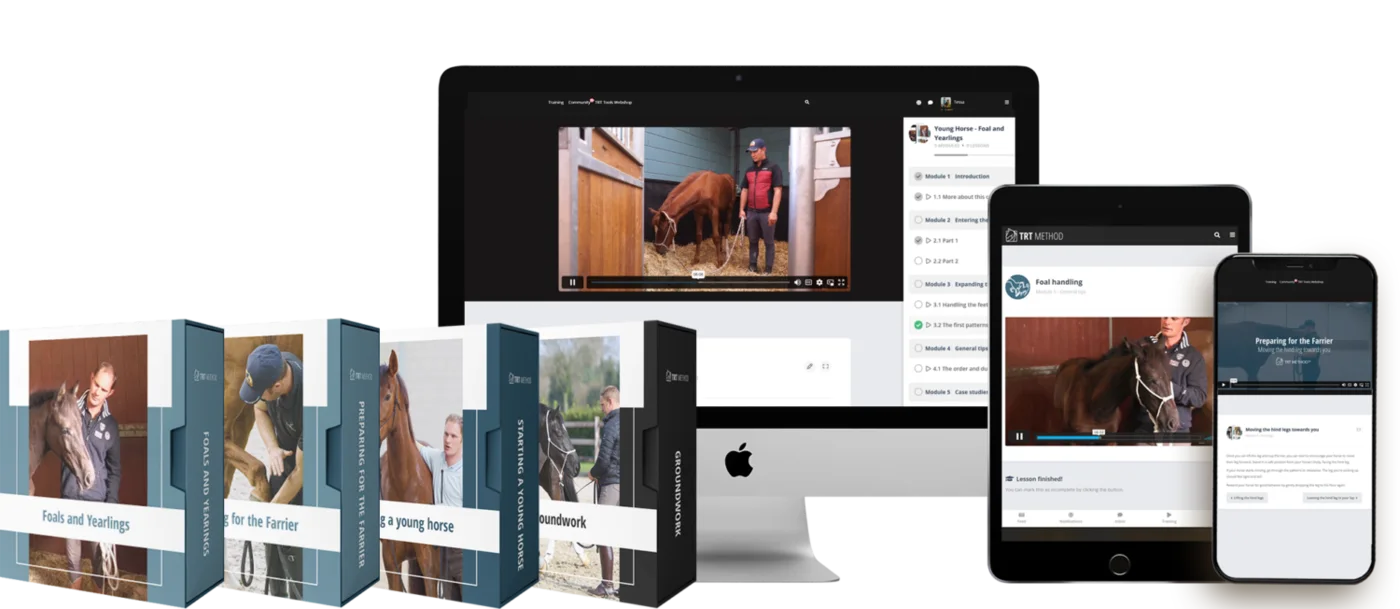
- Build on familiar groundwork
- Understand the preparation between stages
- Continue towards your first rides